ATLAS RESONANT ART
Art is one of the most powerful elements within a visual environment.
Unlike furniture or architecture, artwork occupies the center of the visual field. The eye returns to it repeatedly, using it as a reference point for interpreting the surrounding space. Because of this, a single piece of art can influence how an entire room is perceived. Atlas Resonant Art is selected and placed with this principle in mind. Each piece is intended to anchor the visual field of a space, bringing structure, balance, and coherence to the environment.
When visual relationships within a room are organized in this way, the nervous system can process the environment more efficiently. The atmosphere of the space becomes calmer, clearer, and more supportive of attention and well-being.

ONE.
TWO.
THREE.
THE ROLE OF FREQUENCY
Many biological processes operate through rhythmic patterns and oscillations. Brainwaves, heart rhythms, breathing cycles, and neural signaling all involve repeating patterns that help coordinate communication throughout the body. These rhythms interact with sensory information from the environment. Visual patterns, color relationships, and spatial proportions introduce their own forms of rhythm and structure. When these structures align with natural biological processing, the brain can interpret them efficiently. This interaction between internal rhythms and external patterns forms the basis of resonance.
THE STRUCTURE OF NATURE
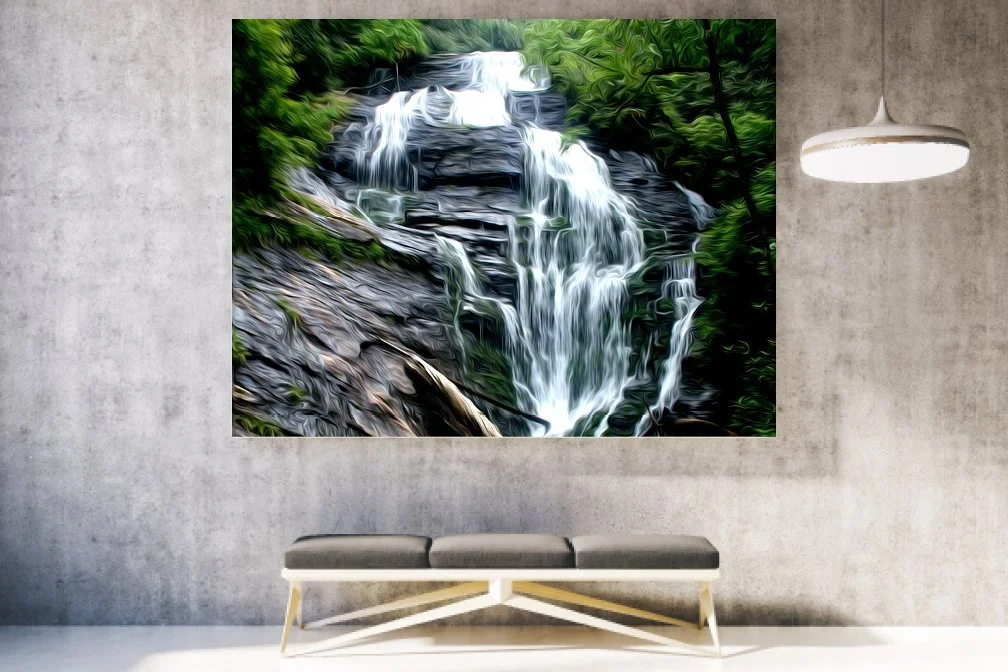
Natural environments are rich with patterns that the human brain has evolved to process. Branching trees, flowing water, cloud formations, coastlines, and mountain ranges all display forms of fractal geometry—patterns that repeat across different scales. Research in environmental psychology and neuroscience suggests that humans respond positively to these structures. Fractal patterns appear to be processed with relative ease by the visual system, often producing measurable reductions in stress. These natural geometries provide a model for understanding why certain environments feel calming and restorative.
THE INTENTION OF ART
Art introduces pattern, color relationships, and symbolic meaning into a space. Unlike many elements of architecture or furniture, artwork directly occupies the visual field. It becomes a focal point through which the brain organizes spatial perception. Because of this position within the environment, art can significantly influence how a room is experienced. When artwork contains balanced structure, coherent pattern relationships, and harmonious color interactions, it can help anchor the visual field and contribute to a sense of stability within the space.
Explore the next section that introduces the tools that make resonance practical within everyday environments.

Featuring:
ESSENCE
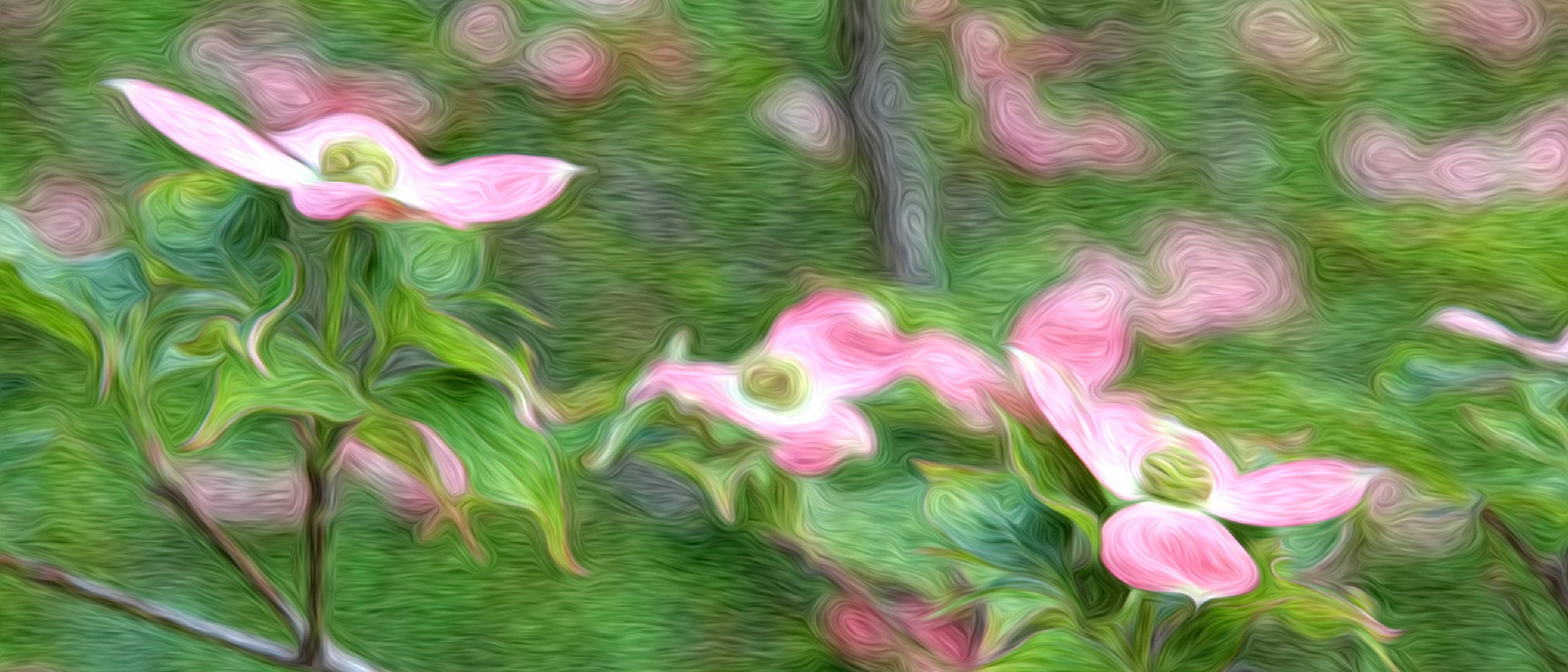
ESSENCE belongs to the Harmony of Blossoms collection, displaying the enchanting allure of blossoms during Spring when nature offers a spellbinding world of hues and fragrances..
ESSENCE resonates at 873 Hz. This frequency resonates with the balancing energy of Harmony — a state of being that supports alignment between thought, emotion, and action. This frequency helps synchronize internal systems, reducing conflict. Harmony allows multiple aspects of experience to function cohesively.